




Here’s What You Need to Know About Wheel Alignments

One of the most nerve-wracking things that can happen while on the road is a strange sound or feel coming from your vehicle. What could that mysterious noise be? Where is the trouble coming from? What can you do about it? One of the most common ailments that plague vehicles is wheel misalignment. When this occurs, it can create vibration, pull the car in one direction or another, and could cause an accident if not taken care of quickly. How do you prevent this from happening? With a four-wheel alignment.
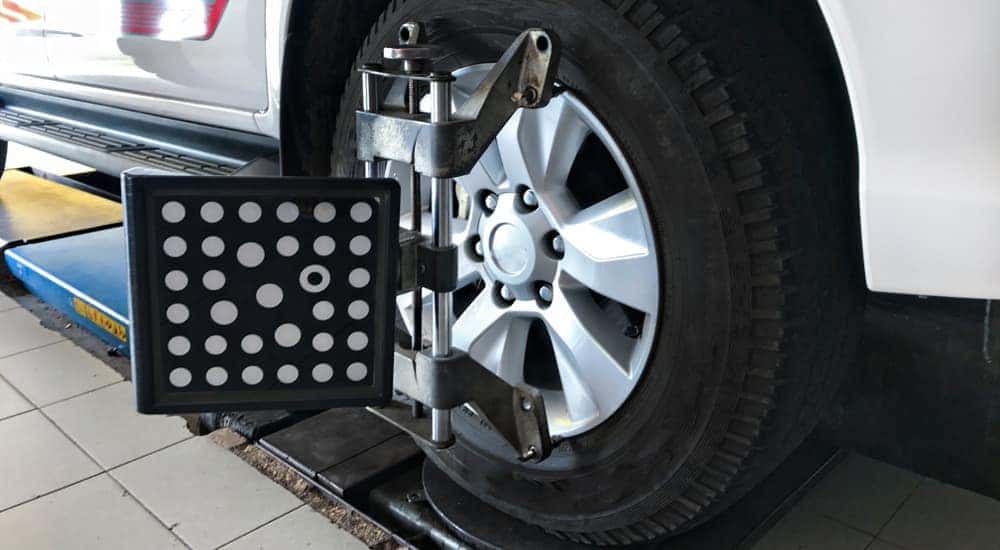
Regular vehicle maintenance includes a wheel alignment, which is also called a tire alignment. If your vehicle has been pulling to the left or right, for instance, that is an indication that its alignment needs to be checked. Of course, the hope is that you won’t need an emergency alignment––as long as you’re up to date on your vehicle maintenance, you shouldn’t have any trouble, apart from one-off incidents. Below, you can read the best tips for maintaining proper wheel alignment, along with some frequently asked questions so that you are prepared the next time you schedule a vehicle maintenance visit. Don’t be afraid to ask our technician questions because once you are able to gauge when your vehicle is even slightly in need of an alignment, you’ll help prevent a host of issues.
Top Three Tips For Maintaining Proper Wheel Alignment
First, it’s important to know that a wheel alignment does not have anything to do with tire rotation or manipulating the wheels. Rather, it concerns a vehicle’s steering and suspension system. Ensuring that your steering and suspension are in prime condition is essential to being able to drive confidently. Here are some ways you can help keep your vehicle aligned between routine maintenance visits:
Tip #1: Maintain Your Vehicle On Schedule
Scheduling routine maintenance is key for your alignment. You should have a wheel alignment performed at least once a year when you rotate your tires or any time you install new tires or suspension components. This ensures that your vehicle is performing at peak condition, which prevents extra wear and tear on your tires. If you notice that your car is wandering, the steering wheel is off-center, or your vehicle pulls to one side, you’ll want to make a visit to our service center so our technicians can take a look and see if you need an alignment outside of routine maintenance.
Tip #2: Avoid Poorly Maintained Roads When Possible
One of the most common causes of misalignment is rough terrain, either on or off the road. Potholes can be just as bad as off-roading when it comes to the alignment of your wheels. As much as you are able, take time to navigate around rougher roads and off-road areas, as they may induce an extra trip to the garage. This is sometimes difficult to do in rural areas, as well as some urban areas. Do the best you can to avoid the worst potholes, and keep an eye on your vehicle’s steering. Inclement weather can also affect your alignment, so if you are able, stay home or only drive short distances on the least affected roads.
Tip #3: Know the Difference Between a Two-Wheel and Four-Wheel Alignment
Depending on the vehicle you drive, you may want to request a two-wheel, otherwise known as front-end, alignment. Otherwise, you’ll want to ask for a four-wheel alignment, which checks both front and back. While most modern vehicles require a four-wheel alignment, there are some vehicles, such as larger pickups, vans, and SUVs, that can get by with a two-wheel alignment. If you do not have your driver’s manual handy, you can always check the manufacturer’s site for information or ask a technician if they can check to see which it is.
Frequently Asked Questions
Don’t feel bad if you don’t know what type of alignment your vehicle needs. There are a million questions drivers ask when confronted with a vehicle issue. While we can’t address them all here, there are a few frequently asked questions that pop up. With that in mind, we’ll give you some basic information you’ll need when you schedule regular maintenance for your vehicle.
Question: “What is tracking, and what does it entail?”
Answer: Tracking is another word for alignment. If you can feel the car trying to pull in different directions, it means that there is an issue with the steering and suspension system that will need to be addressed before the vehicle is able to perform at its peak. Whether you use the term tracking or alignment, a technician will know what you are talking about and can work on your vehicle to make sure that everything is at the correct angle. It’s a good idea to tell the technician all you know about the problem––when you first noticed it, what the symptoms are, and whether you need a two-wheel or four-wheel alignment.
Question: “What are the primary angles, and what are their parameters?”
Answer: While you won’t need to learn every process or term for alignments, it’s generally a smart move to understand what the technician is talking about. If they mention primary angles, they are talking about the basic angle of the wheels. If you are getting a four-wheel alignment, they will be looking at the camber (how much the wheels slope in or out) and the toe (whether the wheels point towards or away from each other) of the front and rear wheels.
Question: “How much time do I need for an alignment?”
Answer: While the time varies from garage to garage, depending on how busy our schedule is, the process typically takes between an hour and two hours. While this may not be ideal if you’re in a rush, it’s important to allot that time so that the technician can do what needs to be done without cutting corners. If a technician is being pushed to complete an alignment ahead of schedule, there is a risk that parts of the inspection and alignment process will be skipped over or missed.

Get Your Wheel Alignment Done at Faricy Chrysler Jeep
Knowing when to schedule an alignment and being able to communicate with your technician if something feels off are tremendous ways to prevent mishaps. Being informed will help you feel more assured and confident in your decision, and taking regular care of your vehicle will ensure that you won’t have to visit a technician prematurely. Take notice of when your vehicle feels different––if you can, note where and when it started and how it is affecting your driving. This will help speed up the alignment process, which in turn will get you back on the road as fast as possible.
You can schedule a wheel alignment with us at Faricy Chrysler Jeep! We can help you get your steering and suspension system back on track with quick, excellent service. We aim to provide the best automotive service in our area, so when you need a wheel alignment or other regular maintenance service, repairs, or parts, come visit Faricy Chrysler Jeep! You can call to set up an appointment or drop by our dealership to talk to a technician in person. We’ll make sure you’re taken care of and that you and your vehicle are ready to go anywhere!
0 comment(s) so far on Here’s What You Need to Know About Wheel Alignments