




All-Season vs All-Terrain vs Winter Tires: What’s the Difference?

Tires are one of the most essential features of any vehicle. Many drivers just take the original equipment tires that their Jeep comes with and go on their merry way, never again thinking about those round pieces of rubber rotating beneath their SUV. If you live somewhere with perfectly temperate weather year-round and stick to paved roads, then you can probably get away with that. However, as a dealership that sells adventure-ready vehicles to drivers in a state with diverse terrain and weather, we know that the best Jeep tires for you may not be the ones your vehicle came with. People tend to ask us, “What is the best tire for my type of vehicle?” But we try to steer them towards a different question: “What is the best tire for where and how I typically drive?”
That second question is more likely to point you in the direction of the ideal set of tires for your needs. Tires are designed more for a particular environment or driving habits than for a particular vehicle. Of course, large vehicles will need hefty tires capable of supporting more weight. But beyond that, it’s mostly about where you drive and how you drive. Being located in Colorado means that we welcome drivers who drive in all sorts of places, from those who stick to the paved streets of Colorado Springs to those who go off-roading up in the mountains. It’s important to us to educate our customers on the best tires for their needs so that they can stay safe, get the traction they need, and prolong the life of their tires. Here’s a look at three of our most popular types of Jeep tires: all-season, all-terrain, and winter.

All-Season Tires: A Jack of All Trades but Master of None
All-season tires are the most common type that will come factory-installed on your Jeep. That’s because they are best for most environments, most times of the year. As their name promises, they are supposed to work during all four seasons. However, this is not strictly true if you live somewhere with serious winters. If you get several inches of snow every winter (which, of course, many of us do in Colorado), all-season tires might not give the traction that you require.
All-season tires do tend to shine in the rainy season. Their tread design is excellent for channeling water away from the vehicle. Come summer, they are fantastic on dry roads, too. They’ll get you good fuel economy and are quiet on the pavement. We tell our Colorado customers that if they stick to the cities and paved roads, they might get away with all-season tires year-round, especially if they have a four-wheel drive Jeep. But we really would recommend keeping a set of winter tires on hand for heavy snowfall.
If you do not want to switch from summer to winter tires when the seasons change, all-season tires should do you well for most of the year. However, there is one important thing to know about all-season tires: they must stay on paved roads. Leave paved roads for off-road environments, and you’ll struggle to get the traction you need, even with a four-wheel drive Jeep. Your drive system is only part of the grip equation; your tires matter, too.
All-Terrain Tires: Ready to Head Off-Road With Confidence
All-terrain tires also hint at their purpose with their name. While all-season tires speak to when they can be used, all-terrain tires are designed with a focus on the where. Many people say that all-terrain tires are like a hybrid of highway tires and mud tires. When you look at them, you’ll instantly notice a more aggressive and less uniform tread design than what you see on all-season tires. This tread design creates good traction on mud, sand, and gravel, as well as light snow and pavement. It can break through dried-up mud and send little stones flying. All-terrain tires also have reinforced sidewalls, capable of supporting more weight.
We know the beauty of living in some parts of Colorado is that you have access to so many environments. You can go to Denver for some city fun, like shopping, dining, and entertainment. However, many Colorado residents choose to live somewhere remote and off the beaten path. Perhaps paved roads don’t make it right up to your doorstep. Then, there are some drivers who seek out rough roads for fun on the weekends. If you need tires that will handle running errands around town, traveling down the highway, and going off-roading, all-terrain tires have you covered.
We do like to tell customers that all-terrain tires are not for drivers who only spend time on paved roads or only spend time in off-road environments. The magic of these tires is in their versatility. If you stick to paved roads, get all-season tires for your Jeep—they get better fuel economy than all-terrain tires. If you stick to off-road environments, you should step up to true mud tires. They’re better suited for difficult surfaces.
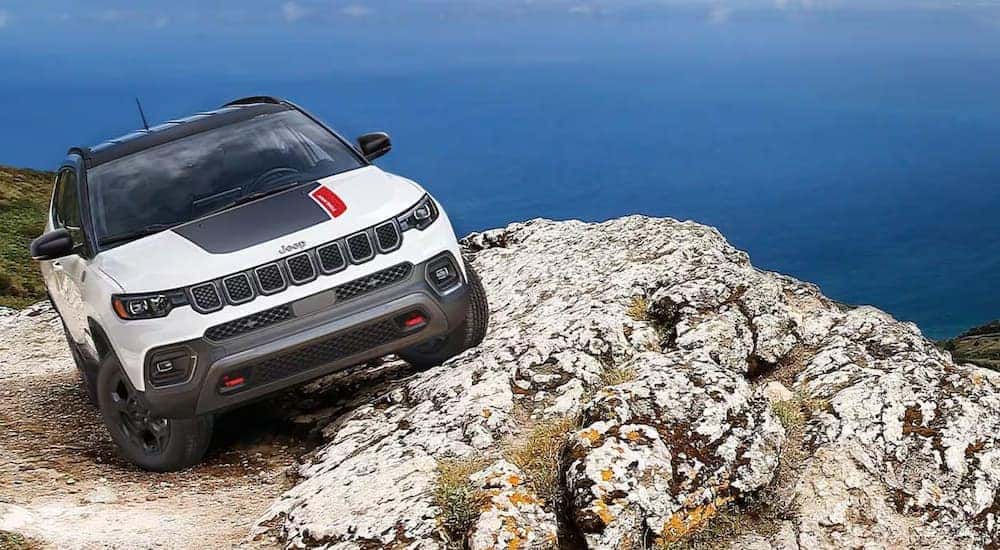
Winter Tires: Designed to Handle Snow and Ice and Freezing Temperatures
Winter tires are for extreme winter weather. They come in handy when all-season tires are not up to the challenge of several inches of snowfall. They are made with rubber that will remain pliable at temperatures far below zero degrees Fahrenheit, ensuring you get the grip you need in the winter. As temperatures fall, the rubber in summer and all-season tires will freeze, becoming rigid and failing to provide you with good grip.
You’ll also notice tiny, sharp-looking cuts in the tread blocks on winter tires. These are called “sipes,” and they are there to provide more grip on icy surfaces. You can also get studded winter tires with small metal spikes that will dig into ice for even better grip. All in all, winter tires are made to break up ice and channel slush away from your tires. They are designed to break through snow-packed roads and make contact with the ground.
You only want to use these tires in the winter, particularly when there has been heavy snowfall or ice on the road. In warmer temperatures, these tires will just get you awful fuel economy, be incredibly loud on dry roads, and not last very long. However, here in Colorado, where some areas can get several feet of snow in the winter, you just need winter tires.
Pick Out the Tires Your Jeep Needs
At Faricy Chrysler Jeep, we have a team of Jeep tire experts who can help you determine the best tires for your needs. In Colorado, you’re likely going to need more than one set of tires. Between the changing weather conditions and the variety of surfaces you might drive on, it’s hard to find one tire that’s right for every month and every environment. Tell our experts where you spend the majority of your time driving. They can help you determine which tires are right for you.
Our tire experts can also give you tips on how to care for and store your tires in order to prolong their usefulness. We know how important good tires are to your safety and your overall behind-the-wheel experience. We carry a large selection of Jeep tires from all the top tire manufacturers and are ready to get you set up with the right set, or multiple sets, for your vehicle.
0 comment(s) so far on All-Season vs All-Terrain vs Winter Tires: What’s the Difference?