


Faricy Chrysler Jeep

Starting at
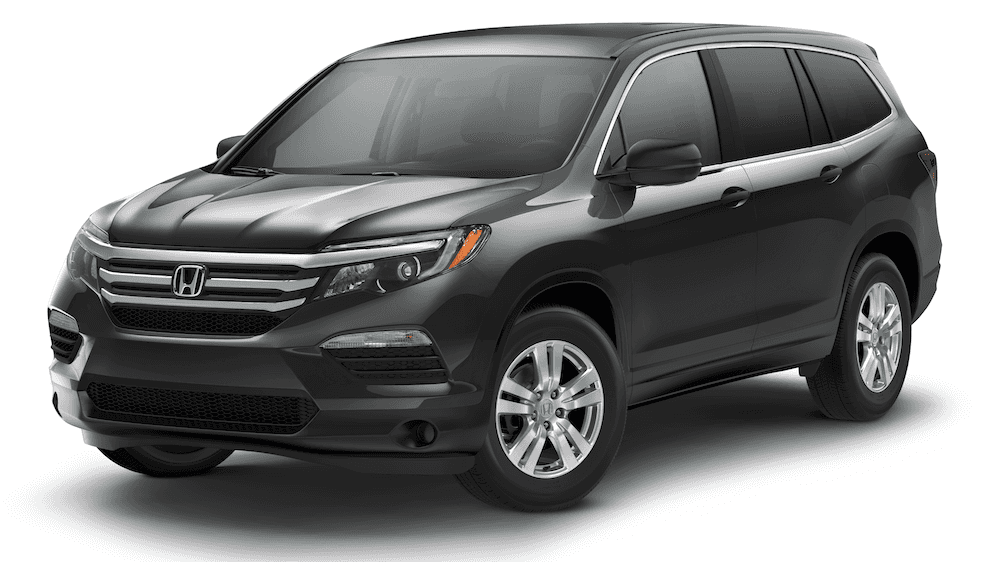
Starting at
| 295 hp | Horsepower | 280 hp |
| 26 MPG | Fuel Efficiency | 27 MPG |
| 2 | Engine Options | 1 |
| LaneSense Lane Departure Warning | Safety Technologies | Lane Keeping Assist System |
| Navigation System | ||
| Touchscreen |
The 2017 Jeep Grand Cherokee vs. 2017 Honda Pilot are incredibly similar. They both offer powerful engines, they include a host of innovative technologies, and they’re both extremely safe. That’s probably why you’ve seen many people debating the merits of the 2017 Jeep Grand Cherokee vs. the 2017 Honda Pilot. However, after doing a bit of digging, you’ll quickly recognize that Jeep’s offering is far superior to the competition.
Why is that? We don’t want to give away too much, but the Grand Cherokee’s versatility is key. The various engine options allow drivers to pick the attribute that best fits their needs, while the various interior features will improve the overall ride quality (regardless of which amenities the driver opts for).
Of course, it’s best if you get your own understanding of why the Jeep is the winner in the battle between the 2017 Jeep Grand Cherokee vs. the 2017 Honda Pilot. Let’s dive in and find out why the former option is superior…
So your choice should be easy. If you’ve been debating the 2017 Jeep Grand Cherokee vs. the 2017 Honda Pilot, it’s clear that Jeep’s newest SUV is the more well-versed option.
The Jeep Grand Cherokee and Honda Pilot both provide drivers with a number of technological features which should help keep drivers occupied during their commute. The touch-screens will make it extremely easy to access your preferred music or navigation system, and the ability to connect your smartphone means you can access all of these functions with the simple sound of your voice.
The brand’s Uconnect system provides drivers access to entertainment, navigation, and convenience applications that improve their overall commute. Drivers can rely on the touchscreen to provide them with everything they want, and the Siri Eyes Free technology means you can access these applications without taking your eyes off of the road.
If you decide to rock out to your favorite music, then drivers should choose wisely between the two available audio systems. The nine-speaker Alpine Surround Sound System provides an adequate listening experience, while the Harman Kardon System (which includes multichannel processing and 19 high-performance speakers) will maximize that audio’s potential.
You certainly won’t be looking for ways to kill time when you’re traveling in the 2017 Honda Pilot. Similar to the Grand Cherokee, the SUV’s touch-screen system provides access to an extensive navigation system and a rear backup camera. Perhaps most importantly, drivers can easily connect their smartphone to the system, allowing them to jam out to all of their preferred tunes. Drivers can even make phone calls and send text messages, which impacts all occupants’ safety.
Both the 2017 Jeep Grand Cherokee and the 2017 Honda Pilot are hulking vehicles, so drivers will need to rely on a powerful engine to help get them through any challenging terrain. Of course, you’ll also want optimal efficiency, especially considering how much it will cost to fill an SUV’s tank. Fortunately, one of these two vehicles will satisfy your needs.
The Jeep Grand Cherokee’s pair of engine options deliver at least 240 horsepower, so you won’t have any issues zooming down the road. Plus, one of the offerings is extremely fuel efficient, so you’ll save some extra money at the gas pump. Meanwhile, the Pilot’s engine can deliver adequate power, but there’s no denying that the efficiency suffers as a result.
Who doesn’t like options? Well, the 2017 Jeep Grand Cherokee provides customers with the opportunity to choose between two powerful engine options. The 3.6-liter Pentastar V6 engine is the clear star, as the unit is capable of pumping out 295 horsepower and 260 pounds-feet of torque. Despite this muscle, the engine is surprisingly fuel efficient, delivering a 26 highway miles per gallon fuel economy that results in a range that exceeds 600 highway miles. Alternatively, drivers can opt for the smaller 3.0-liter EcoDiesel V6 engine, which delivers 240 horsepower and 420 pounds-feet of torque. Similar to its counterpart, the engine is also fuel efficient, as drivers can expect a highway range that tops 730 miles.
Honda touts their Pilot as a “family SUV,” which may explain why the vehicle doesn’t offer as much power as its rival. Unfortunately, the brand only offers a single engine option, so it’s not like drivers can hunt for an offering that fits their wants and needs. Still, the 3.5-liter V6 engine can pump out a commendable amount of power at 280 horsepower and 262 pounds-feet of torque.
The fuel efficiency also leaves something to be desired. When the engine is equipped with the two-wheel-drive six-speed automatic transmission, drivers can only anticipate a highway fuel economy that’s around 27 miles per gallon on the highway. The all-wheel-drive six-speed automatic transmission is just as underwhelming, delivering a 26 highway mile per gallon fuel efficiency.
All car buyers, regardless of the make or model that they’re pursuing, should value safety as they’re shopping for a new ride. Well, these customers can be assured that both the 2017 Jeep Grand Cherokee and the 2017 Honda Pilot will provide them with a number of safety functions.
The Honda Pilot does an admirable job of providing technological features that should play a role in preventing an accident for occurring. The Grand Cherokee includes similar capabilities, but the vehicle has also been designed to withstand any collision. This clearly makes the Jeep a superior option in regards to safety.
Jeep’s SUV has been specifically designed to provide drivers with optimal protection during an emergency. The vehicle’s body contains front and rear crumple zones, and these inclusions will play a significant role in absorbing any of the energy caused by a collision. Meanwhile, the seven airbags (including multistage driver and front passenger airbags, side-curtain airbags, front seat-mounted side airbags, and a driver-side knee blocker airbag) will provide the necessary amount of cushion during a crash.
Fortunately, the Grand Cherokee also provides a number of features that should prevent accidents from occurring in the first place. For instance, the LaneSense Lane Departure Warning (with Lane Keep Assist) will alert the driver when drifting is detected, while the Forward Collision Warning (with Active Braking) will notify the driver when they’re approaching another vehicle too quickly. If a crash is imminent, the vehicle will automatically apply the brakes to lessen the impact or prevent the collision altogether.
The Honda Sensing system is intended to keep all of the Pilot’s occupants out of harm’s way. Engineers included a number of technological features that should help drivers avoid an accident, like the Road Departure Mitigation System that detects when your vehicle is straying from the intended path. The Lane Keeping Assist System plays a similar role, while the Adaptive Cruise Control allows you to take a brief break from driving without compromising safety. Finally, the Collision Mitigation Braking System relies on sensors to determine your distance from another vehicle. If you’re approaching a car at too great of a speed, the Pilot will do its best to avoid the collision.

*Images, fuel economy, and other stats, may reflect higher trim levels, options, or features that may result in a higher cost from the starting MSRP.
MSRP excludes tax, license, registration, additional options, and possible destination charges. Dealers set own prices.

