




“Why Is My Car Suddenly Very Loud?” What to Do When This Happens to You

One of the top complaints auto repair professionals hear is, “My car just started being loud!” Our cars, just like everything else in our lives, require regular maintenance to keep them working properly. While things like oil changes and tire rotations can be somewhat easier to remember, we don’t always know what other parts of our cars might need attention until they let us know. If your car has been making a strange loud sound lately, it’s a good idea to bring it in for a check-up by the trained technicians in our service center. If you’re trying to put your finger on that noise, though, here are some common loud noises and their causes.
Just the Facts
Before you bring your vehicle to our auto service center, it’s a good idea to really pay attention to the noises your car is making. First, what kind of noise do you hear? Common loud noises include screeching, chugging, rattling, humming, squealing, grinding, thudding, scraping, clunking, clicking, and ticking. Your service professional will want to know which of these noises best describes what you’re hearing so they can determine what might be causing them.
They’ll also want to know where the noise is coming from. This might be hard to pinpoint, so make a note of when you’re hearing the loud noise. Does it happen when you’re braking? Accelerating? Turning one direction or another? When your car starts making loud noises, it’s a good idea to stop driving it until you know what’s going on. But before you do, try to get an idea of the type of noise, where it’s coming from, or when it’s happening.
Heavy Metal: Diagnosing Brake Issues
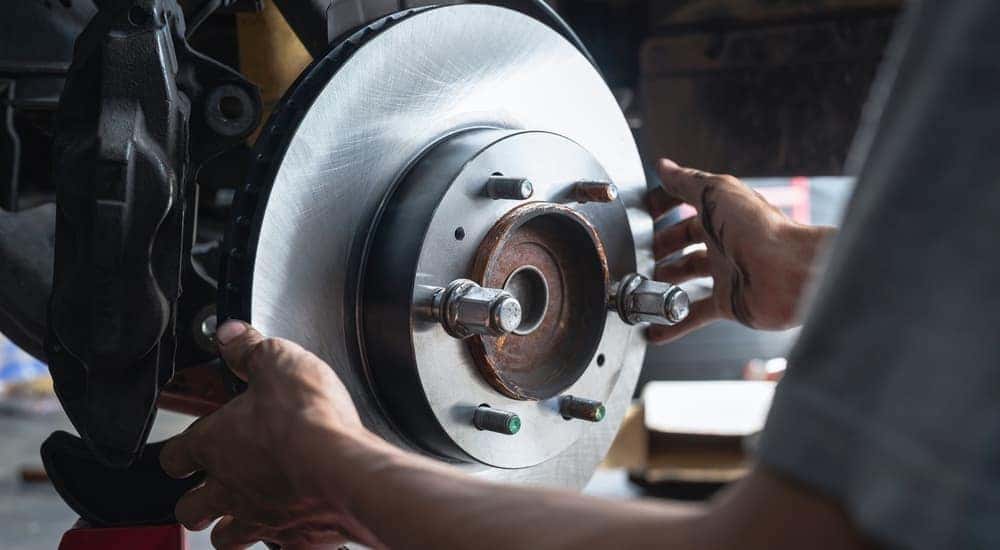
Most modern car braking systems involve brake pads pressing against a metal disc or rotor. When you press the brake pedal, the pads press against the rotor to slow or stop its motion. When the rotor stops rotating, all of the parts that keep your car in motion––the wheels, tires, and axles––also stop rotating, thus bringing your vehicle to a halt.
If you are noticing a screeching, metal-on-metal howl coming from your vehicle when you press on the brakes, it is likely that your brake pads are about ready to be changed. Many brake pads include a wear indicator designed to make noise to alert drivers to the upcoming need to replace them. When you catch this type of noise happening, it’s a good idea to make an appointment to have your brakes serviced, but not necessarily an emergency.
This becomes an emergency, however, once that heavy metal hit single becomes a constant soundtrack. Grinding noises and sensations through the brake pedal mean that your brake pads are completely gone, and you are being serenaded by the not-so-blissful tune of your calipers and rotors grinding against each other. This not only makes it difficult to listen to your preferred musical selections but seriously compromises the ability of the brakes to function properly. If you hear grinding, stop by our service center ASAP.
It Came From Under the Hood
Most of a car’s most complicated pieces lie under the hood, so it’s understandable that noises that seem to be coming from under the hood would be pretty scary. For example, a squealing or whining noise that sounds like it’s coming from in front of the driver’s seat could be a loose or worn serpentine belt. The serpentine belt is a long rubber belt that winds through a variety of pulleys and tensioners. It typically sits alongside the engine and is responsible for keeping your alternator, air conditioning compressor, power steering pump, and water pump running properly.
A serpentine belt is built to last a while––typically between 60,000 and 100,000 miles. However, the blazing hot, stressful conditions of the engine can cause the belt to stretch and wear. Replacing it is generally a quick and low-stress fix. However, an aged serpentine belt can cause issues like engine overheating, battery power drainage, and loss of power steering. It’s best to have it replaced as soon as it starts whining to avoid these issues from building into a huge engine problem or accident. A loud clicking noise may indicate a problem with the serpentine belts or with the pulleys that hold it in place.
Ticking and screeching noises may come from bearings that are wearing out. These are the components that keep rotating parts like the crankshaft or wheels working properly and are essential for a functioning vehicle. Essentially, the braking and steering functions may be impacted, the oil pressure may drop, your engine can clog with metal particles, and the wheels can fall off. This sounds somewhat dramatic, but bearings are pretty important.
Another common loud noise is a gurgling or muttering noise when attempting to start the engine. Generally speaking, this is the sign of a battery that is almost ready to be replaced. Again, this can be a pretty simple thing to address as long as it’s taken care of before you’re late for work, you have locked your house key inside, and your phone is in your coat pocket on top of the kitchen counter. Given those kinds of odds, it will likely be raining as well, so avoid the hassle and don’t delay replacing your battery when it starts complaining.
It’s Not Actually a Race Car, But…
Some people like to have the kind of car you can hear coming for miles. But if your SUV starts sounding like it belongs on a drag strip, then there’s likely a problem that needs to be addressed. Roaring sounds that seem to start beneath the driver’s seat are usually exhaust-related. This can be caused by a leak or crack in the exhaust system.
While the exhaust system usually muffles all of the really loud noises coming from the engine––hence the term “muffler”––a cracked exhaust system allows not only noise to escape but fumes, as well. Therefore, it’s really important to have this checked out right away to avoid actual health concerns for all of your vehicle’s occupants.
If the sound is more of a rattling, the problem may lie in a loose piece of the exhaust system rather than a damaged piece. A series of brackets secure the exhaust system, and when they break or fall off, the system itself can rattle around and make all sorts of interesting noises. Unfortunately, if you ignore the rattling, it’s more likely for the system to be damaged as it jostles around under your car. Rattles can become roars very quickly!

What Should I Do if My Car Is Making a Loud Noise?
Sometimes, a sudden loud noise is ok. When moviegoers erupt into laughter in a quiet theater, that’s rarely a problem. But if your car starts making a loud noise, it’s a good idea to get that checked out right away. Do your best to figure out what kind of noise it is, where it’s coming from, and when it occurs, and contact our auto repair shop.
Sure, sometimes this isn’t an emergency, and you can drive for a while with these loud noises. But there are consequences. Not only do you have to deal with the screeching, chugging, rattling, humming, squealing, grinding, thudding, scraping, clunking, clicking, and ticking, but continued driving on a damaged or worn-out part can create greater problems down the line.
0 comment(s) so far on “Why Is My Car Suddenly Very Loud?” What to Do When This Happens to You