




Going by the Book: Your 2021 Ram 1500 Maintenance Schedule

Ram trucks are some of the most durable, dependable pickups on the road today, and recent models are no exception, especially if you keep up with maintenance. The brand has earned countless industry accolades over the years, with the 2021 Ram 1500 taking home both the Car and Driver Editor’s Choice Award and MotorTrend’s Truck of the Year honors. A look at the truck’s recent history is even more encouraging: Ram was named #1 in initial quality by J.D. Power and Associates, a first for a truck-specific brand and a reflection of the fact that Ram trucks tend to give drivers fewer issues than any other vehicle on the market. Critics also cite the pickup’s longevity as one of its main selling points, with the Ram 1500 retaining its value better than any other vehicle in its class, so long as you continue to take it to get Ram service near you.
In fact, it’s not unusual to see some surprisingly vintage Rams on the road today. With such impressive dependability and resale stats, Ram trucks aren’t just an exceptional lineup of work-ready pickups; they’re an investment. Like with any investment, it needs to be protected, but luckily there are some tried-and-true methods to ensure your Ram truck keeps on rolling for as long as possible. Just follow our recommended 2021 Ram 1500 maintenance schedule, and you’ll be able to enjoy your Ram truck for years to come.
While vehicle mileage all depends on usage, the average driver logs about 14,000 miles per year. Some 2021 Ram 1500s are likely to have already crossed that threshold, but for simplicity’s sake, we’ll begin the maintenance schedule as if the pickup is starting from 0 miles. Remember: regardless of mileage, it’s not a bad idea to bring your Ram truck in for service at least once a year. Many of these recommendations come directly from the maintenance schedule found in the 2021 Ram 1500 owner’s manual. For simplicity’s sake, we’ll only mention a maintenance task the first time it should be performed, but some will be repeated many times throughout the life of the vehicle.
8,000 miles
Change Oil – Get into the habit of regular oil changes right from the start. At 8,000 miles, it might still feel like you just left the dealership, but there are simply fewer, more affordable ways of keeping an engine running. The 2021 Ram 1500 is equipped with an oil change indicator that monitors oil quality, fuel ethanol levels, and a number of other metrics to let you know when it’s time, but remember to also factor in your driving conditions. Most drivers can get away with sticking to the normal 7,500-10,000 mile schedule, but those using their Ram 1500 for slightly heavier duties such as light towing should aim for an oil change every 5,000 to 8,000, or 3,500 to 5,000 miles for off-roading and heavy towing.
Change Oil Filter – The oil filter plays an important role in separating out impurities from your motor oil. While not quite as vital as an oil change itself, it should be a regular part of your oil change routine. Experts used to recommend performing a filter change during every oil change, but owing to advances in engine construction, this can now easily be stretched to once every two oil changes.
Rotate Tires – Tire rotation is an often-overlooked part of any vehicle’s maintenance schedule, but it shouldn’t be. Tires tend to wear unevenly due to a number of factors, including driving style, road conditions, alignment, suspension, and the vehicle’s drivetrain. This not only reduces the lifespan of the tires but their effectiveness as well. Tires are often rated to last for a certain number of miles, but that all depends on regular maintenance, so don’t expect a set of 60,000-mile tires to actually last 60,000 if you’re not taking care of them. There’s no handy dashboard indicator to let you know when it’s time to rotate the tires, so just make a habit of getting it done every six months or 6,000-8,000 miles along with your oil change.

20,000 Miles
Inspect the Front Suspension, Tie Rod Ends, and Brakes – As long as you’ve been keeping up with your oil and filter changes, there shouldn’t be much in the way of actual maintenance at this point, just a couple of components to check up on. At the 20,000 mile mark, give your front suspension, tie rod ends, and brakes a once-over, keeping an eye out for any obvious signs of wear or damage. Not sure what to look for? That’s why we’re here. Just bring your Ram 1500 into our service center, and we’ll give it a look. We know it might be tempting to go the D.I.Y. or YouTube route, but there’s truly no substitute for the experience and professionalism of a trained mechanic.
30,000 Miles
Inspect CV/Universal Joints, Front/Rear Axle Surface – Again, mostly just a lot of inspections to take care of here. These tasks are getting a little more complex at this point, often requiring a trained eye to spot issues, so it’s probably time to get the professionals involved if you haven’t already. That said, we don’t recommend taking an entirely hands-off approach. By doing your own inspection of elements like the CV/Universal joints and axle surfaces at this relatively low mileage, you’ll have a good baseline against which you can measure future wear and tear and be able to spot minor issues before they become big problems.
Replace Engine Air Filter – Your engine air filter ensures the air in your engine is as clean and combustion-ready as possible. This filter should be replaced every 15,000 to 30,000 miles under normal driving conditions and is usually one of the easier DIY tasks on the service schedule. Just detach the three fasteners holding the filter cover and inspect the filter itself for dirt, debris, or obvious flaws. A new air filter shouldn’t cost more than $20 and will go a long way in improving overall engine efficiency and power.
60,000 Miles
Replace Automatic Transmission Fluid/Filter – These two tasks are normally addressed somewhere in the 50,000 to 100,000-mile range, but the 2021 Ram 1500 is actually entirely self-sufficient in this respect. The transfer fluid and filter are both designed to last for the life of the vehicle barring any major damage. The fluid should be replaced if the transmission is ever disassembled, but that’s (hopefully) a rare case.
Replace Engine Coolant/Brake Fluid – For brake fluid, just locate the reservoir under the hood and add fluid until it reaches the designated mark. This shouldn’t come up too often, but if your brake system warning light comes on, you’ll at least know where to look. Still, it’s never a bad idea to ask your mechanic to check your brake fluid during regular service appointments or any work involving the brake system itself. Under normal conditions, engine coolant should last between 10 years or 150,000 miles, but familiarize yourself with the system all the same so you can more easily spot abnormally low coolant levels. If coolant appears dirty or rusty, consider a full drain, flush, and refill. Remember to always use OAT coolant conforming to MS.90032 as it has been specifically engineered for the Ram 1500.
100,000 Miles:
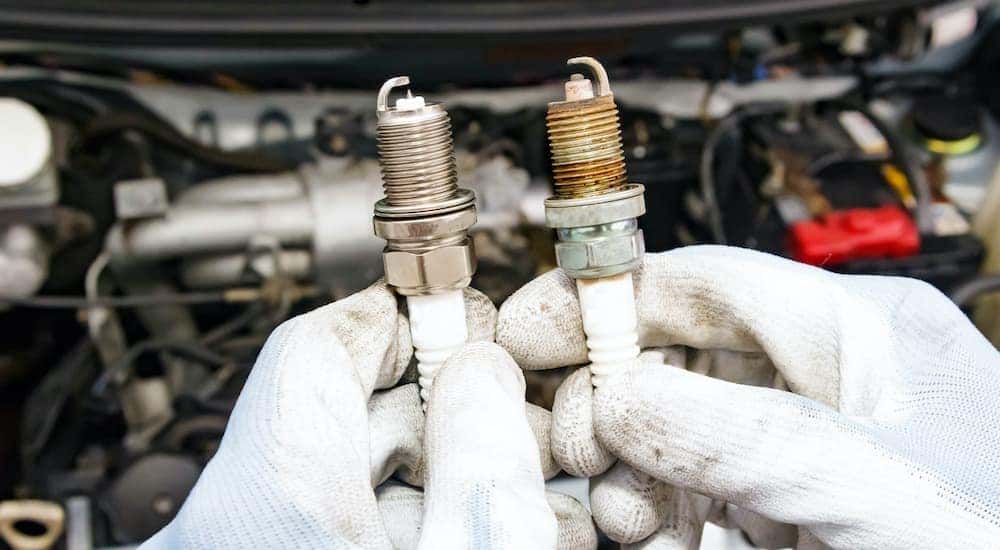
Replace Spark Plugs – Your spark plugs are getting on in life at this point, so it’s probably time for a replacement. Old or dirty spark plugs can cause costly engine misfires and, for $20-$40 a pop, are well worth the investment. Consider replacing spark plug wires at this point as well. While less likely to break down over time, it’ll save you some money on labor by having both done at the same time.
Inspect PCV Valve – Short for Positive Crankcase Ventilation, this handy little component protects your engine and the environment from the toxic gases put off by the crankcase itself. It can easily be checked by removing the valve from the engine and giving it a shake. A metallic rattling noise indicates its working well, whereas no noise at all could indicate a clogged, ineffective valve. Again, in ideal circumstances, this should never need to be replaced but throw it on the maintenance schedule all the same.
120,000 miles
Inspect Transfer Fluid Case/Replace Filter – At the 120,000-mile mark, repeat all the maintenance performed at 60,000. Those driving four-wheel drive models have one additional task on the list here: inspecting the transfer fluid case and replacing the filter. Just remove the filler plug and ensure the fluid reaches at least the top of the bottom edge of the filter plug hole. Drivers regularly using the Ram 1500 as a fleet or police vehicle, taxi, or to tow trailers should always replace the transfer fluid at this point, owing to the harsher conditions they face.
150,000 miles
Replace Transfer Fluid – Regardless of how the vehicle has been used, the transfer fluid should be drained and replaced at this point.
Replace Engine Coolant – Flush and replace engine coolant at 150,000 regardless of its condition. This is especially important as the vehicle gets on in years, so don’t let this one fall by the wayside.
Regular Maintenance Will Extend the Life of Your Vehicle
Regular maintenance is the easiest way to improve any vehicle’s longevity. While some drivers tend to let some of the smaller maintenance tasks fall by the wayside, they could end up paying for it in the long run. Remember: no matter how much some of these maintenance tasks might cost, they’re almost always going to be cheaper than the inevitable repair job. RepairPal estimates that annual repair costs for a Ram truck ring in at around $700, making regular maintenance a worthwhile pursuit for any budget-conscious driver. AAA suggests drivers spend around $50 on maintenance to keep a vehicle in tip-top shape, which can often eliminate the need for unexpected, costly repairs.
Whether you purchased your 2021 Ram 1500 at our dealerships or anywhere else, the team at Faricy Chrysler Jeep is here to help. With an experienced team of friendly, Mopar-certified technicians on staff, you’ll always receive the highest possible level of service here at Faricy Chrysler Jeep. Our expansive service & maintenance department uses the best components in the business, stocking OEM Mopar parts for all the Chrysler, Dodge, Jeep, and Ram vehicles you’ll find here at the dealership. Drivers looking to stick to their Ram 1500’s service schedule will appreciate our Mopar Express Lane, where we specialize in many of the checks, replacements, and inspections mentioned above. Give us a call today to schedule service, and we’ll show you why drivers have been trusting us to keep their vehicles working at their best for over 75 years.
1 comment(s) so far on Going by the Book: Your 2021 Ram 1500 Maintenance Schedule
Why don’t dealerships seem to have a clue on what services are due on new vehicles and at what intervals? I remember back in the days, when they would have charts/phamplets and/or once connected to a computer, the due service would be explained and displayed. I know it is within the operators manual, but why am I teaching the dealership what they should already know?