




Car Steering Basics: From How It Works to Signs of Trouble

Navigating your weekday commute, running errands around town, buying groceries at your local store, and dropping the kids off at school are all tasks we do without much thought behind the wheel. We don’t have to overthink the best route because it’s familiar and well-known, with many drivers often experiencing a period of travel amnesia where their daily routine in the driver’s seat becomes so familiar that they don’t really remember the drive. This familiarity is a natural part of driving, but issues that lead to auto repair, like a steering wheel that’s hard to turn, can jolt us out of that routine.
Suddenly, navigating your car out of the driveway or garage is challenging because the steering wheel doesn’t turn effortlessly. Your senses are heightened because if the straightforward turn out of your driveway is difficult, you know your safety is at risk when you face heavier traffic. But what causes steering trouble, particularly one nearly impossible to turn?
Your Car Steering: From Function to Operation
The steering wheel seems straightforward: you turn it in the direction you want the vehicle to move, and the car responds. However, there’s far more going on behind the scenes to make this seemingly simple action occur time and time again as you navigate the road. The steering wheel that defines the driver’s seat is one of many integral components of your vehicle’s steering system. This system is tasked with converting the rotational demands of the steering wheel (your input) to maneuver the wheels.
The steering system in most cars, trucks, and SUVs is a rack-and-pinion design, which connects the steering wheel to a rack that houses the rack-and-pinion system via a steering column or shaft. A pinion gear sits at the end of the steering shaft, spinning and moving the rack as you turn the steering wheel. The rack has a tie rod at each end connecting the steering rack to the wheels. These components work together to convert the rotating motion of the steering wheel into the linear motion necessary to turn the wheels in the appropriate direction.
While early steering systems were purely mechanical and relied on the driver’s strength to turn the car, the 1950s saw the introduction of power steering, dramatically impacting how easily a vehicle steers. This system adds a hydraulic pump with pressurized power steering fluid to streamline the operation, making the piston and rack move seamlessly with less input or exertion from the driver via the steering wheel. More recent models have replaced hydraulic power steering with electric power steering, substituting a more efficient and reliable electric motor for the complex hydraulics.
Why Does Car Steering Fail?
A steering wheel that’s difficult to turn is alarming but often easy to fix. The steering system is complex, requiring various parts to work seamlessly together. Add in the complexities of power steering, and there’s no question that these parts can slowly wear and tear, become misaligned, or have issues.
Power Steering Fluid Is Low, or the Pump Is Bad
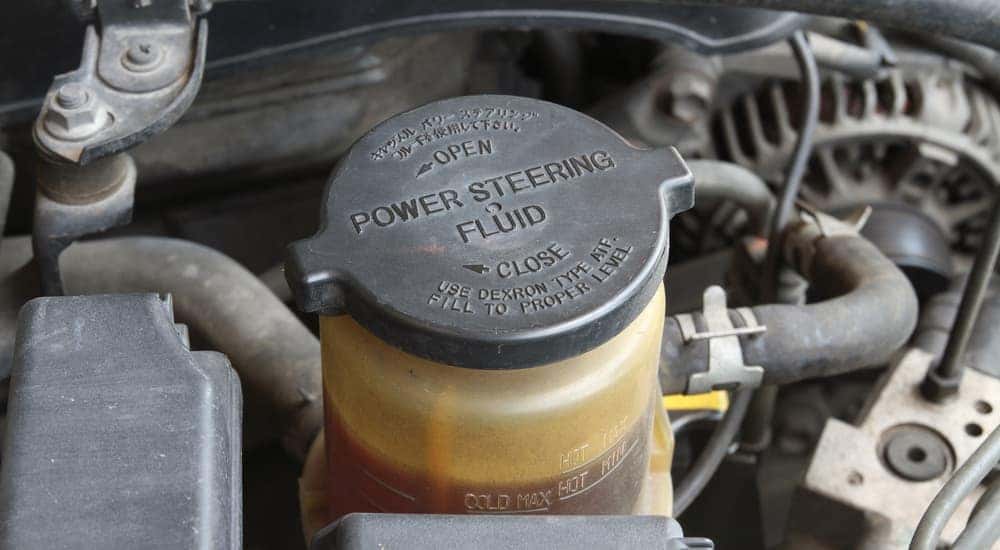
Your vehicle’s power steering system relies on pressurized power steering fluid to operate seamlessly. So, what happens when the fluid is low? Think of the risk of driving your vehicle without oil to lubricate, clean, and cool the engine’s many moving components. It’s not ideal; the same applies to power steering fluid. When this fluid level declines, your steering system doesn’t have what it needs to respond when you turn the wheel. Therefore, the lack of pressurized fluid means a stiff steering wheel that requires more strength when you get in the driver’s seat.
In some instances, the power steering fluid may be fine, but the pump itself is bad. The pump is just as integral to the system because it pressurizes the power steering fluid, making your vehicle easy to turn. As the pump begins to fail, the steering wheel may be difficult to turn, and you may hear a whining noise anytime you attempt to turn.
The Power Steering Belt Needs to Be Replaced or Realigned
The steering belt transmits power from the engine, serving as the working force behind the pump. Think of the high demands on the steering wheel and its many components, like the belt. Everyday driving causes wear and tear, which can lead to a worn, loose, misaligned, or damaged belt. When this occurs, the pump doesn’t have the necessary power to pressurize the fluid for the power steering system. As a result, your vehicle becomes more difficult to turn, and the steering wheel is much less responsive.
Signs of Steering Wheel Trouble
Did you know the complexity of your vehicle’s steering system? Most of us don’t think twice about what’s behind the steering wheel, expecting it to seamlessly maneuver our vehicle based on our input. However, steering trouble sometimes arises and signifies it’s time to visit a trusted service center for diagnostics and repair. So, what signs should you look for as you drive?
#1 – Steering Wheel Is Hard to Turn
We’ve talked a lot about a steering wheel that’s difficult to turn because this is the most common issue we see at our service center. This issue often indicates trouble with the power steering system, from a potential leak depleting the pressurized power steering fluid to a bad steering pump or worn belt. Either way, your steering wheel feels harder to turn because the power steering system isn’t running optimally.
#2 – Your Vehicle Pulls to One Side
Driving or steering your vehicle in a straight line should not be difficult. If you notice your car starts gradually pulling to one side or randomly wanders left and right, there’s reason to be concerned. A vehicle randomly pulling to either side could signify worn tie rods, which is an easy replacement. If you notice your vehicle pulls only to one side, it’s likely an issue with your tires or brakes, like low air pressure in your tires or a stuck brake caliper.
#3 – Vibrations in the Steering Wheel
Have you ever noticed your steering wheel feels like it’s vibrating? Just as a vehicle that pulls to one side doesn’t always indicate trouble with the steering system, the same is true for a vibrating steering wheel. In some instances, the tie rods may be worn; however, in other cases, it can indicate worn brake pads or that it’s time to bring your vehicle in for a wheel alignment and balancing.
#4 – You Hear Strange Noises When You Turn
You shouldn’t hear strange noises when you drive, at least nothing beyond the purr of the engine and the sounds from the entertainment system. Sometimes, a problem with the steering wheel is immediately noticeable by what you hear when turning the wheel. For example, you may notice a screech, whine, or grinding noise when you attempt to turn. Whining and screeching could indicate trouble with the power steering pump or low power steering fluid levels, while grinding may signify a problem with the rack.

Steering Problems? It’s Critical to Respond Quickly
Whether your vehicle makes strange noises when you steer or the steering wheel itself is difficult to turn, your response is critical. Anything that affects your vehicle and how it steers also impacts your safety in the driver’s seat. For example, if your car is harder to turn than usual, your response time is delayed, putting you at a greater risk of a collision. Similarly, if the power steering belt is worn or cracked, you can expect the system to progressively struggle as it can’t work optimally to help you steer. The key is to recognize the signs of trouble and respond quickly to heighten your safety in the driver’s seat and ensure your car, truck, or SUV has everything it needs to run and steer its best.
0 comment(s) so far on Car Steering Basics: From How It Works to Signs of Trouble