




Can You Repair a Tire?
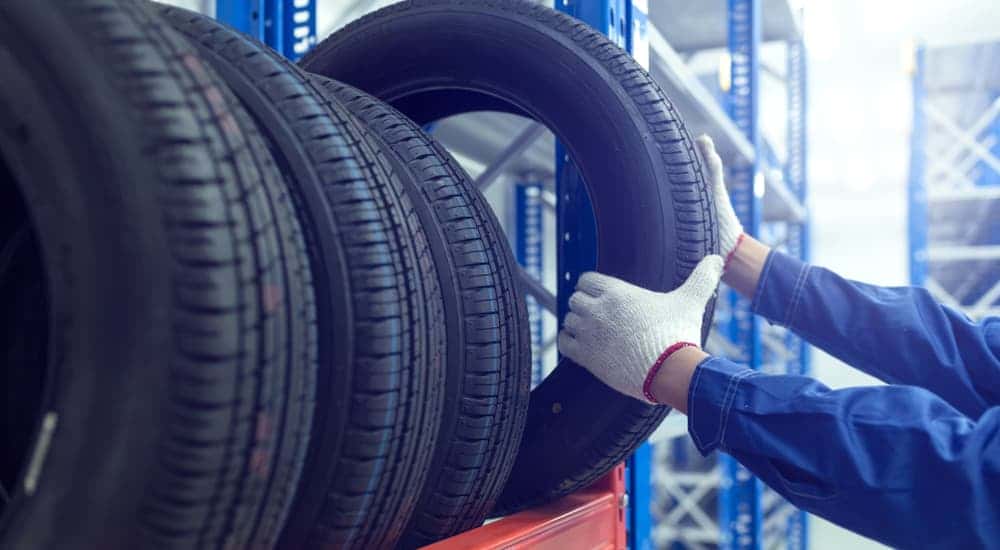
We’ve all been there before. We get into our car on a particularly cold morning; we turn on the car to warm it up, and the dreaded low tire pressure icon appears on our dashboard. We hope it’s just the effect of the cold weather as opposed to a puncture. If you’re driving a newer car, truck, or SUV, the icon may even identify the tire that is suffering—and even the current pressure reading.
Fortunately, when this happens, you can swing by Faricy Chrysler Jeep to get your tire checked out. Our service department features the leading tire center in Colorado Springs. The extreme weather we experience in this part of Colorado means we have to be extra vigilant about things like tire pressure. A slow leak caused by a nail or screw can cause you problems down the road if you don’t get it fixed. Fortunately, in most cases, all your tire needs is a quick fix. This depends on several factors, such as the wear of the treads and the size of the hole.
Why Get It Repaired?
Ignoring your tire pressure problem could cause some issues for your car. For example, riding on low tires can disrupt your handling. If one tire is underinflated, it will cause your car to pull to one side. This will make steering and cornering difficult. An underinflated tire will also increase your braking distance. This makes it harder for you to avoid an accident.
It will also harm your vehicle’s fuel economy. The unbalanced tire will drag, meaning your car’s engine will have to work harder to get up to and maintain speed. This will cause you to use more fuel.
Over time, driving on an underinflated tire will cause your car’s wheels to misalign. Furthermore, you can damage the wheel rims, which is a much costlier repair than simply fixing or replacing a tire. Eventually, you may have a blowout, which can be a real catastrophe if you are driving on a busy highway. To avoid this, you will need to get your damaged tire repaired or replaced.
What Are the Parts of a Tire?
Many drivers don’t know that tires are comprised of many parts; they just see large rubber things inflated with air. However, these are complex items. Understanding as much will help you see the need for a professional repair.
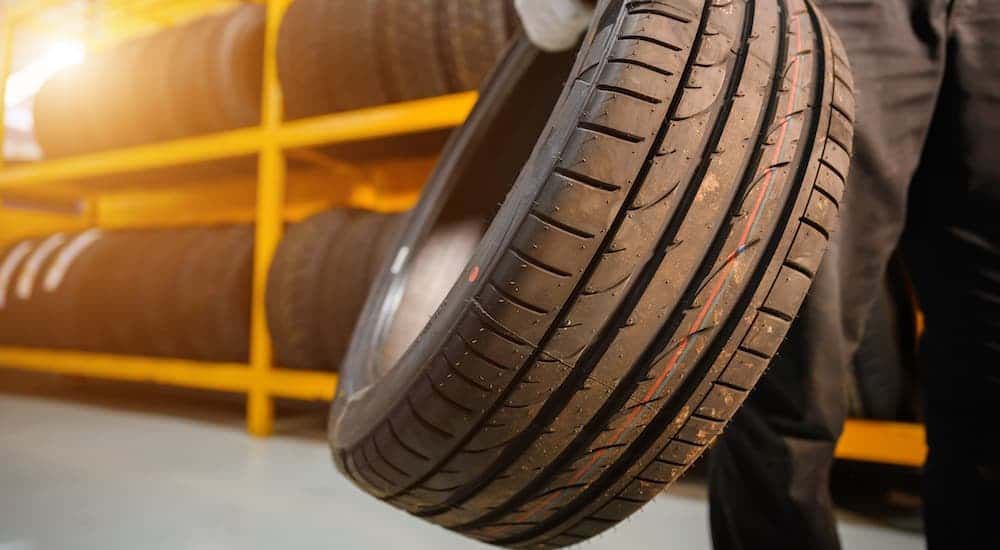
The easiest way to understand a tire is to start with its exterior. The part that hits the road is called the tread. The notches in the tread are called tire sipes; these are designed to channel rain, snow, ice, dirt, and sand away from your tire, allowing your wheels to get traction. The deep pits between the treads are called tire grooves. These provide a way for the water and other things moved by the tire sipes to escape from the tire so the thread can maintain contact with the road. If the treads are worn down, you could hydroplane, which is when a film of water gets between the tires and the road, causing your car to skid and, in some cases, to become minorly airborne. You could also skid when you apply the brakes. Tires with worn treads thus need to be replaced.
The part of the tire you see when looking at the side of your vehicle is referred to as the tire sidewall. These will be stamped with the make and size of the tires, which is important information to know if you need to replace one. You should never ride on mismatched tires; equip only the proper replacements.
The part that attaches the tire treads to the sidewall is called the tire shoulder. There are also a number of parts of your tire that you cannot see. For example, under the sidewall are a series of tire body plies. These consist of a number of layers of rubber designed to give the tire strength and density while sealing the air in. Under the treads are the tire belts. These are steel, fiberglass, or other sturdy materials covered in rubber and crisscrossed to give strength against puncture and damage to the tread.
The tires themselves are seated on metal rims that are part of your vehicle’s wheels. Most vehicles use either an aluminum alloy or steel for their wheels. The inner liner and tire bead are the parts that secure your tire to the rims. Some off-road models feature “beadlock” wheels. These lock the tire bead into place on the rim so you can underinflate the tire for better off-road performance. Unless you have beadlock wheels, you should never go above or below the manufacturer’s recommendation for the PSI inflation level of your tires.
How Can You Repair a Flat Tire?
When you bring your car into our service center, our technicians will do a full inspection of your vehicle to determine the cause of the low pressure. Sometimes, the cause is as simple as a severe change in the temperature. When this happens, barometric pressure will drop, which can cause your car’s tires to indicate low pressure. However, if the inspection reveals a puncture, our technician will get to work on fixing the tire.
The first thing they do is remove the screw or nail that caused the puncture. A simple pair of pliers will often do the trick. Next, the technician will probe the puncture with an awl to see the depth and angle of the puncture. This is necessary to make sure the proper-sized plug or stem is used. It is also necessary because some punctures cannot be properly repaired.
The technician will then clean the area around the puncture, insert the plug or stem, and add the appropriate amount of self-vulcanizing cement. This will hold the plug in place. After the cement is dried, the technician will buff the exterior of the plug so that it is flush with the tread.
After completing the repair, the technician will inflate all four tires to the proper PSI recommended by the manufacturer. It is important to try to have all four tires properly inflated, evenly, and not just the one that has been repaired.
When Does a Tire Have to Be Replaced?
Sometimes, a puncture can be too large or deep to repair. If the puncture is larger than one-quarter of an inch, it is probably not safe enough to plug it. There is a very good chance that the plug won’t hold and the tire will continue to leak air. Also, if the puncture happens to the tire shoulder or tire sidewall, you may not be able to repair the tire. This all depends on the seriousness of the puncture. However, these types of punctures are difficult to repair and should be done only by trained tire professionals.
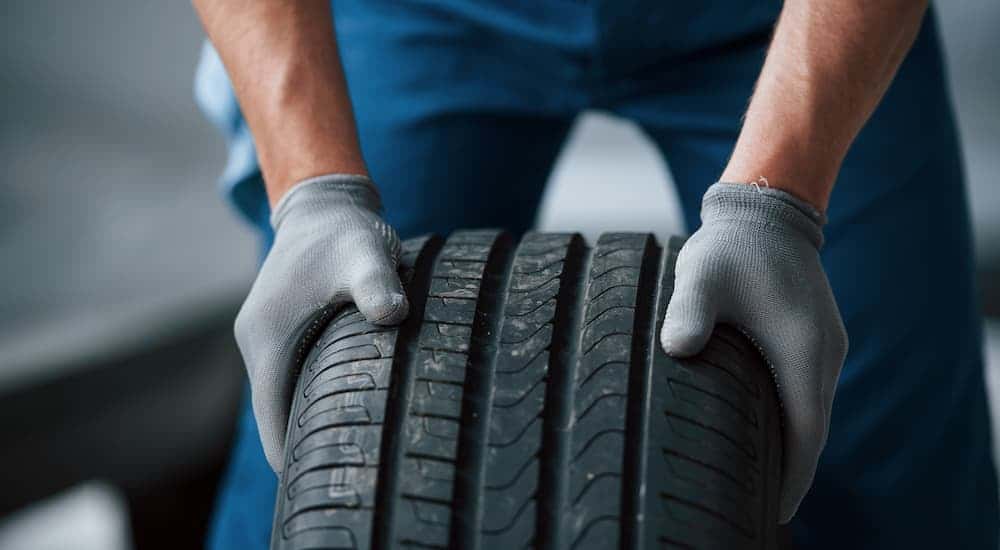
Sometimes, a tire can be damaged beyond repair. While this is rare with most modern radial tires, things can nevertheless happen that require the tire to be replaced outright. One such case of a tire becoming irreparable is if the treads are too shallow—a rather inevitable, organic process. However, in this situation, you should probably consider replacing all four tires at the same time, since it is unsafe to ride in a vehicle with tires that have too little or unequal tread. Many tires have a tread wear indicator that will let you know when they are no longer safe to ride on. These such tires are often referred to as “bald.”
Keeping Your Tires Repaired
It is vital that you keep your tires in good working order. One of the easiest ways to do this is to get them rotated on a routine basis. Each time you bring your car in for an oil change, have the technician also rotate your tires. This will allow their treads to wear evenly, increasing their lifespan while maintaining your vehicle’s performance.
In the event you suffer a tire puncture, swing by Faricy Chrysler Jeep as soon as possible. Repairing a tire is often a simple and inexpensive procedure, whereas driving on a punctured or underinflated tire can lead to bigger and costlier problems. If we determine that the tire cannot be repaired, we will be able to provide you with a replacement tire for your vehicle.
Don’t put your car, yourself, or your passengers at risk. Make sure you keep your vehicle’s tires properly inflated and repaired. This will give you the best performance while helping you get wherever you are going safely.
0 comment(s) so far on Can You Repair a Tire?