




Bad Battery or Something More? What to Know About Battery Replacement

A sputtering engine, dimming headlights, and an overwhelming feeling of dread tend to mean that there’s trouble brewing with your car. What that trouble may be, however, isn’t always clear, which is why it’s essential to pay careful attention to what your vehicle is trying to tell you. For many drivers, having difficulty starting their car means a bad battery, but there are other parts at play that could also need to be replaced, and one of them is the alternator.
This is why it’s important to turn to the experts when it comes to battery replacement and more. How do you know if your car battery is bad or if it’s the alternator? Although the two systems have a similar job, there are plenty of differences between them, which warrant different repairs. Here at Faricy Chrysler Jeep, we want to help you keep moving forward with precision, so let’s talk about the difference between a bad battery and a bad alternator.
Signs of a Bad Battery
Your car battery has an important job to do when it comes to how your vehicle performs. Not only is it responsible for starting your vehicle by providing the starter motor with the power it needs to turn over your engine, but it is also responsible for delivering the right amount of power to various electrical components. There are telltale signs that your battery is going bad, which is why it’s crucial to take notice the moment something seems amiss. Here are some of the top signs of a bad battery:
Difficulty Starting Your Vehicle
Have you ever gotten into your vehicle, put the key into the ignition, and heard a stubborn clicking sound resounding throughout the cabin? Typically, your car should turn over on the first try, and if it’s having trouble doing so, it may mean that your battery is starting to fail. The electrical current sent to the starter motor becomes weaker over time, which will prompt you to make multiple attempts to get your vehicle started. This is perhaps the first and most noticeable sign that your battery will need to be replaced soon.
Dimming Lights
Sliding into the driver’s seat, you start your car and take a look around the cabin. Do the lights seem to be dimmer, or is it just you? Come to think of it, it has become more difficult to see at night, are your headlights dimmer too? You may not be imagining it. Dying batteries typically cause the lighting elements of your vehicle to become dimmer due to a lack of power, so if you notice this, it’s time to bring your vehicle in for a new battery.
Corroded Battery Terminals
You may begin to think that something is amiss with your vehicle, which leads you to pop open the hood for a look around. If you notice that your battery terminals are corroded or there is a foul smell emanating from the battery, it’s time to get it checked out. Sometimes, the battery housing will be misshapen, which is another telltale sign that a battery replacement is in your future.
How to Fix a Dying Battery
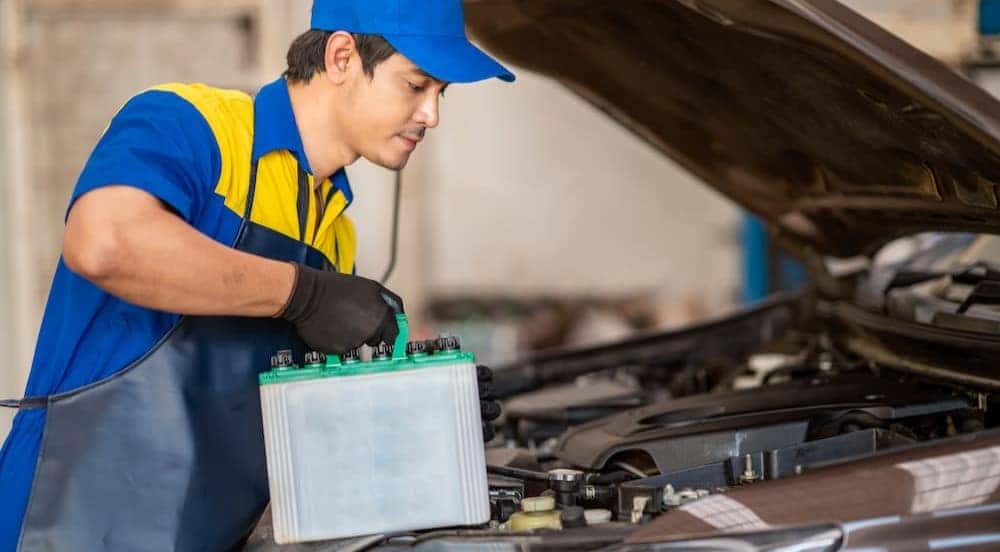
Swapping out your battery is easy, especially when you partner with a quality service center staffed with knowledgeable professionals. It’s important to find the correct type of battery for your vehicle and driving habits, and our trained technicians will help you do just that. They’ll also ensure that it’s installed properly and working optimally before sending you on your way. The important thing to remember is to address a dying battery as soon as possible. There’s only so much time you’ll have before your battery fails and you end up stranded on the side of the road.

Signs of a Bad Alternator
Like the battery, the alternator is also responsible for powering your vehicle, although it has a different job to do. Once your battery starts your car, the alternator is responsible for keeping your battery charged and powering all of the important electrical elements on board. From the headlights to power steering, display screens to windshield wipers, the alternator is at the heart of your vehicle’s critical functions. You may be wondering how you could ever know the difference between a bad battery and a bad alternator, but don’t worry, we can help. Here are some of the top signs of a bad alternator:
Your Vehicle Won’t Stay Running
Once your battery starts your vehicle, the alternator takes over. If you are beginning to notice that your car isn’t able to stay running, this may be your alternator signaling for help. You may have jump-started your car only to find that it stays on for a matter of minutes. This is the alternator failing to do its job, and if your alternator isn’t working properly, your battery won’t remain charged either.
Fluctuating Power
Dying batteries often cause your headlights to dim, but the alternator may be to blame if you see your headlights or other electrical components suddenly dimming and then becoming brighter. A dying alternator provides inconsistent power to these components. If you notice that your lights are dimming, flickering, or brightening, this is your sign to bring your car in for service.
Unresponsive Electronic Components
You touch the button on your door to put your windows down, only to find that it’s taking longer than usual. Or maybe you notice that your display interface isn’t as responsive as before. Slow components like these are often symptoms of a bad alternator. You may also notice that some of your driver display features aren’t working properly, like your speedometer, which can make for an unsafe driving situation.
How to Fix a Bad Alternator
Just like a bad battery, having a bad alternator will require the help of an experienced team. Our technicians will diagnose your vehicle to pinpoint the problem and provide you with the solution you need to help you get back on the road. You may just think that it’s your battery causing these issues, but it could be something more, which is why it’s always recommended to head to the pros for assistance.
Avoiding Battery and Alternator Issues in Your Vehicle
The good news is that problems with your battery and alternator can be avoided, and the first step is bringing your car in for routine maintenance. At these service appointments, your vehicle will be checked to ensure everything is in working order. If something needs to be addressed or will need to be repaired in the near future, we will alert you to it right away. This will allow you to fix the issue before it becomes a problem.
As far as your battery is concerned, it’s important to try and maximize its integrity as best as possible. Batteries deplete far more quickly when left to the elements, so if you have a garage where you can keep your car during extremely hot or cold weather, we recommend utilizing it. You’ll also want to keep your battery charged, which means taking your vehicle for a spin around the block if it’s been a while since you’ve driven it. As far as the alternator goes, if you notice any of the signs mentioned above, don’t keep driving the vehicle, thinking the problem will go away. This will only cause more harm to your car. Instead, bring it to our team so that we can address any issues and prevent an unsafe driving experience.
Learning about the differences between a bad battery and a bad alternator can help you in the long run. It’s important not to ignore any issues with your vehicle, especially when they impact critical functions like keeping your car running and powering its lighting elements. If you’re unsure, it’s always advised to bring your vehicle to our service center to get the opinion of our knowledgeable techs. This way, you won’t have to worry about the quality of your vehicle or the safety of your ride.
0 comment(s) so far on Bad Battery or Something More? What to Know About Battery Replacement