




Alignments and New Tires: Here’s the Scoop
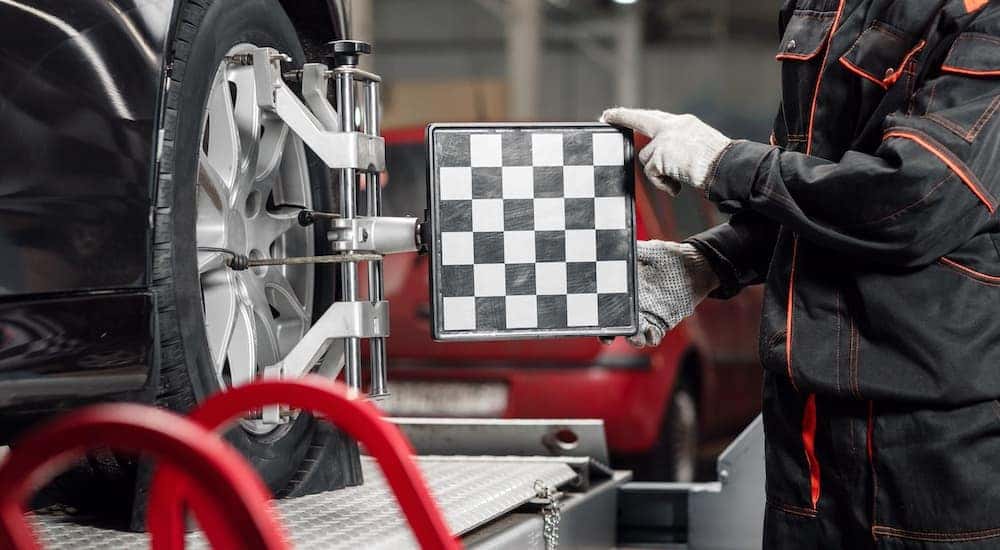
You recently invested in a set of new tires for your Jeep and know from the gaping hole in your wallet that you need to do everything possible to protect your investment. One of the most critical steps you can take is to trust Faricy Chrysler Jeep to mount your new tires and perform an alignment after installation. Why is this so important?
Without a proper alignment, your new tires can wear unevenly, forcing you to reinvest in another set sooner than you’d like. Fortunately, the advantages of an alignment don’t stop there, especially when you’ve purchased new tires. Faricy Chrysler Jeep is the best place for a Jeep alignment in Colorado Springs because, as Colorado natives, we’re intimately aware of our state’s rugged landscape and the toll it can take on your Jeep. Here’s everything you need to know about alignments and how this routine service can dramatically impact your time on and off the road in Colorado.
What’s An Alignment Anyway?
Although it’s often called a tire or wheel alignment, an alignment actually adjusts your vehicle’s suspension or how the wheels connect to the vehicle. Whether you drive a car, truck, or SUV, its performance relies on a delicate balance of acceleration, braking, and power. Your vehicle’s suspension manages this balancing act and how power is delivered to the wheels.
A misaligned suspension can throw everything out of whack. For example, think of the suspension as your back or backbone. If you have a bad back that leaves you hunched over in pain, you know that walking like this can exacerbate the issue and leave other joints achy as you compensate for this position. It’s the same with your vehicle’s suspension; instead of achy joints, your tires wear unevenly, and your engine burns more fuel as it works harder.
Camber, Caster, and Toe: It’s All About the Angles
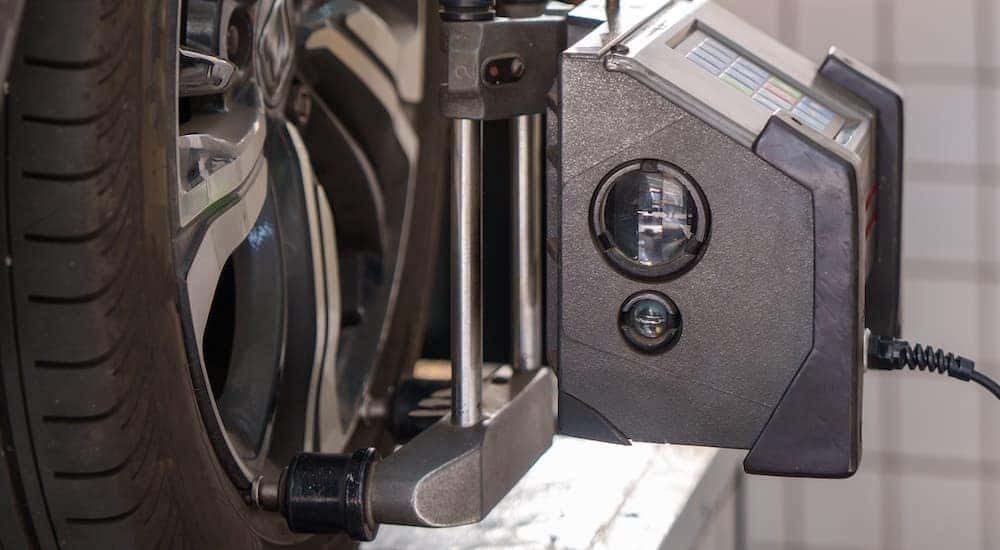
At Faricy Chrysler Jeep, technicians will mount your new tires and then perform an alignment by measuring the camber, caster, and toe angles of your suspension. Why are these angles so critical? Because every vehicle relies on these three angles to perform its best. Let’s put it in perspective.
Camber
The camber angle looks at the position of the tires from the front of your vehicle. Tires angled inward have a negative camber, and tires angled outward have a positive camber. Tires that tilt too far in either direction can lead to premature wear of your bearings, ball joints, and other suspension-related parts. Your new tires can also suffer since an improper camber angle will cause uneven wear on the inside or outside of the tread.
Toe
Measuring the toe angle requires moving from the front to above your vehicle for a bird’s eye view of your wheels. It’s the same as looking down at your feet to see where they’re pointing. A toe-in position indicates the tires are pointed inward, and a toe-out position indicates they’re pointing outward. While a little bit of toe angle can improve handling, too much is not ideal and can feather your new tires, leaving one side of the tread smooth and the other side sharp as it accommodates the misalignment.
Caster
Our technicians also look at the caster angle of your tires, which measures the steering axis of the suspension when looking from the side of the vehicle. Imagine a line drawn through the center of the wheel from the sky to the ground. This centerline is the basis of measurement, with a negative caster angling the steering axis toward the headlights and a positive caster angling toward the windshield. This angle is critical because it directly impacts your vehicle’s steering, cornering, and overall stability.
Why New Tires Require an Alignment
Think about how much you spent on your last set of tires. While there are many affordable tires on the market, any situation where you spend more than a hundred dollars on your vehicle is an investment. Why not get the most out of your new tires and put your hard-earned money to work?
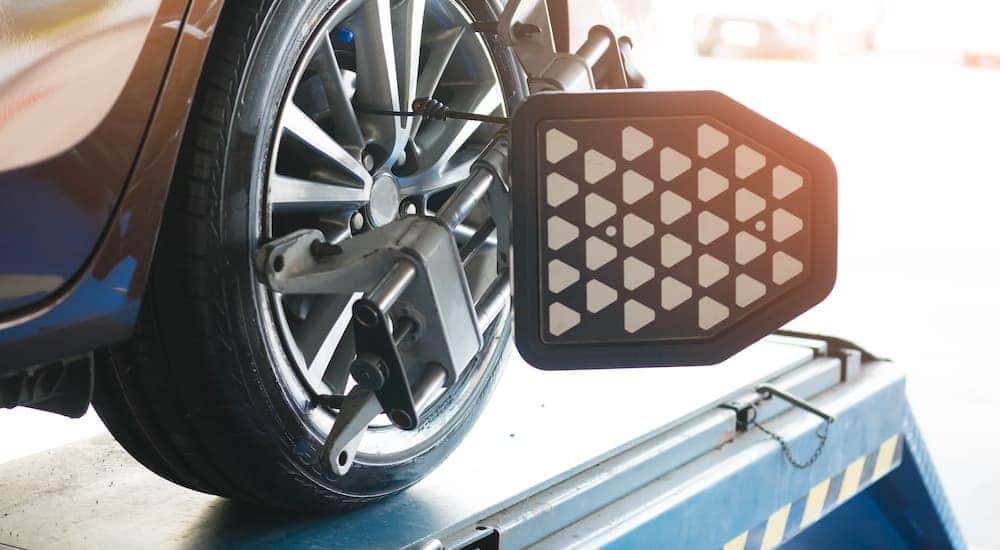
New tires are a great way to improve your safety on the road and your Jeep’s performance. However, without an alignment, you’re doing very little to protect your investment. You will find yourself shopping for another set of tires sooner rather than later since a misaligned suspension can shorten the lifespan of your tires by causing uneven wear. You’re also not doing your vehicle any favors and could suffer the consequences of a rough ride and poor fuel economy.
Other Signs It’s Time for an Alignment
Investing in a new set of tires immediately puts getting an alignment on your to-do list, but several other signs can lead you to our service center for an alignment. How do you know what to look for and when to schedule an appointment? We’ve got you covered.
Suspension Modifications or Severe Impacts
Anytime you alter your vehicle’s suspension, such as with a lift kit, you need to have an alignment. The same is true if you’re involved in a collision, whether you hit a large pothole, debris in the road, a curb, or another obstacle. These severe impacts can jar your vehicle out of alignment and impact its performance.
Rough Roads and Technical Terrain
How often do you drive on rough roads or challenging, technical terrain? Jeeps are staples in Colorado because they can effortlessly navigate your weekday commute and venture off the pavement without missing a beat. Unfortunately, Colorado’s demanding trails and obstacle-laden landscape can take a toll on your Jeep’s suspension, gradually altering the camber, toe, and caster angles. Over time, you’ll notice the tire tread wearing unevenly or a decline in fuel economy, which can be remedied with an alignment.
Difficulty Steering Straight
You may notice your steering wheel is off-centered or that your vehicle pulls to one side despite your efforts to steer in a straight line. These are common signs that it’s time for an alignment, but they can also point to other issues. For example, bent or worn suspension parts like ball joints and tie rods can also contribute, making a simple pull in the steering wheel hard to diagnose without considering the camber, toe, and caster angles, tire wear, and other performance-related issues.
Getting the Most From Your New Tires: Alignments and Beyond
As a proud Jeep owner, you’re no stranger to adventure and have likely seen the scenic wonders of the Switzerland Trail, Bald Mountain, and the Rampart Range Road. If so, that experience has probably taught you a valuable lesson––the importance of investing in a good set of tires. But why stop there?
Once your new tires are mounted, don’t venture off the pavement just yet. Instead, take the time to get an alignment to get the most out of your investment. An alignment ensures your Jeep’s suspension is ready for your new tires, minimizing the risk of uneven wear and directly impacting how your vehicle performs and consumes fuel. From improved handling to saving money at the pump, getting a new set of tires and an alignment at the same time is a guaranteed win and a must for Colorado Springs drivers with a penchant for adventure.
0 comment(s) so far on Alignments and New Tires: Here’s the Scoop