


Faricy Chrysler Jeep
Maintaining your vehicle is one of the most important responsibilities you have as a driver. After all, failure to bring your car in for routine maintenance can result in getting stranded on the side of the road or, worse, getting into an accident. Perhaps the most important maintenance service involves your tires. Tires not only provide much-needed traction on road surfaces, but they also support your vehicle's weight, as well as affect braking and other crucial elements of your travels. If you're searching for "tire service near me" and are unsure where to turn for reliable assistance, let Faricy Chrysler Jeep help you maintain your vehicle so that it continues to deliver a safe and dependable ride mile after mile. When it comes to tire service, there's a lot to learn, so let us show you why it's essential to be mindful of your vehicle's tires and take care of them properly.
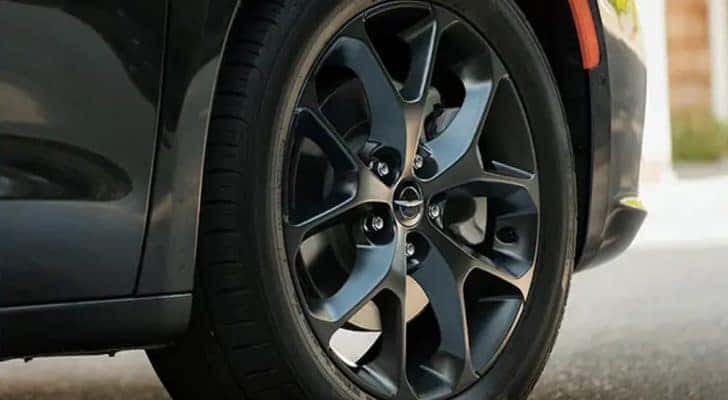
Like anything you buy nowadays, you have plenty of options for the type of tires you put on your car. Depending on the vehicle you drive and your travel habits, your tires will need to suit your situation perfectly so that you can enjoy the best driving experience possible. Most cars, trucks, and SUVs are equipped with all-season tires, which allow your vehicle to react favorably in almost any weather and road conditions. They're designed to provide a smooth, responsive ride and can be kept on your car throughout every season instead of being removed for the winter or summer months (hence the name "all-season"), making them perfect for many drivers. Whether you're a frequent commuter or everyday errand runner, all-season tires are great options for the vast majority of drivers.
For drivers seeking maximum control during inclement winter weather, winter tires are available to provide the assurance you need. Winter tires offer unmatched traction in snow and ice due to their deep tread and special rubber compounds. But while they hold up well during the winter months, it's not advised to keep them on your vehicle once the weather warms up, as the heat causes them to wear much more rapidly. For the warmer months, summer tires are perfectly designed to handle dry roads. Unmatched steering responsiveness and enhanced stopping power make summer tires ideal for temperatures over 40 degrees.
You'll also find a number of other types of tires, which are designed for various lifestyles. Off-road tires, which include all-terrain and mud-terrain tires, are ideal for those who crave adventure and frequently find themselves venturing off the beaten path. Increased traction and handling, especially on uneven terrain, make these tires a necessity if you're looking to have a little off-road fun. Depending on the type of vehicle you drive, you'll also have your choice of truck tires, SUV tires, touring tires, and performance tires for when your journey is all about enjoying the ride. Due to all of your options, it's advised to partner with the pros when choosing the right tires that work for your vehicle and satisfy your driving needs.

You never know when you're going to need your spare tire. You may drive over a nail or let your tire pressure get too low, and then all of a sudden, your spare is there to save the day. This is why the spare tire is so crucial to your travels, which means that taking care of it is as important as maintaining your other tires. Tires have a tendency to lose pressure due to normal wear and tear and changing temperatures, and the same goes for your spare tire, which is why you should be checking its pressure levels at least once a month.
If your spare tire is losing pressure, you'll want to inspect it for damage. If there's no damage evident, you'll want to re-inflate it to match its specifications, which can be found in your owner's manual. While a full-size spare should be inflated to the same air pressure as the other tires on your car, a compact spare needs to be kept at much higher pressures––generally around 60 psi.
You'll also want to check your spare tire's tread to ensure there is no wear or damage. For those who have a full-size spare tire, it's highly recommended to include this tire when you have your tires rotated. This means removing one of the tires (typically the right rear tire) and replacing it with the spare. However, this will vary depending on your vehicle's specifications and your driving habits. This is why having a professional assist you with caring for your spare is highly suggested.
One of the most critical components of maintaining the tires on your vehicle is monitoring the tire pressure. Tire pressure is essential because the air inside the tire supports the weight of your vehicle, affecting how your car, truck, or SUV performs and your overall safety on the road. Improper tire pressure can dramatically impact your vehicle. So, how do you ensure that your tires have the proper air pressure?
The Tire and Rim Association sets tire standards in the United States. It provides guidelines for tiremakers that reflect the maximum inflation pressure and load level for every tire size. These guidelines consider how cars, trucks, and SUVs handle and perform differently, from prioritizing efficiency to towing heavy loads. Tiremakers work with automakers to determine the recommended tire pressure for every model, printing that number on a label inside the vehicle's door jamb.
The label shows the recommended air pressure for that specific vehicle and reflects rigorous testing conducted by tiremakers and automakers to determine the ideal pressure for optimal performance. This number differs from the pressure rating printed on the tire itself, which is the maximum pressure for that tire, not the recommended tire pressure. Do not inflate tires beyond that level. Always consult the doorjamb label or owner's manual when inflating your vehicle's tires.
Tire pressure is critical because too much or too little air can be hazardous to your safety. For example, off-road enthusiasts typically "air-down" their tires to maximize traction on rough or technical terrain. This is ideal at low speeds because it maximizes the tire's surface area in contact with the ground. However, it's detrimental in typical driving conditions because an underinflated tire generates more heat and doesn't absorb shocks or impact as well, possibly leading to damage and excessive wear.
Overinflated tires are also hazardous because too much air affects the tire's overall shape. The additional air causes the tire to bulge and reduces the tire's footprint on the road. The smaller footprint is dangerous in slippery conditions, can affect the vehicle's handling, and will cause excessive wear along the center of the tread.
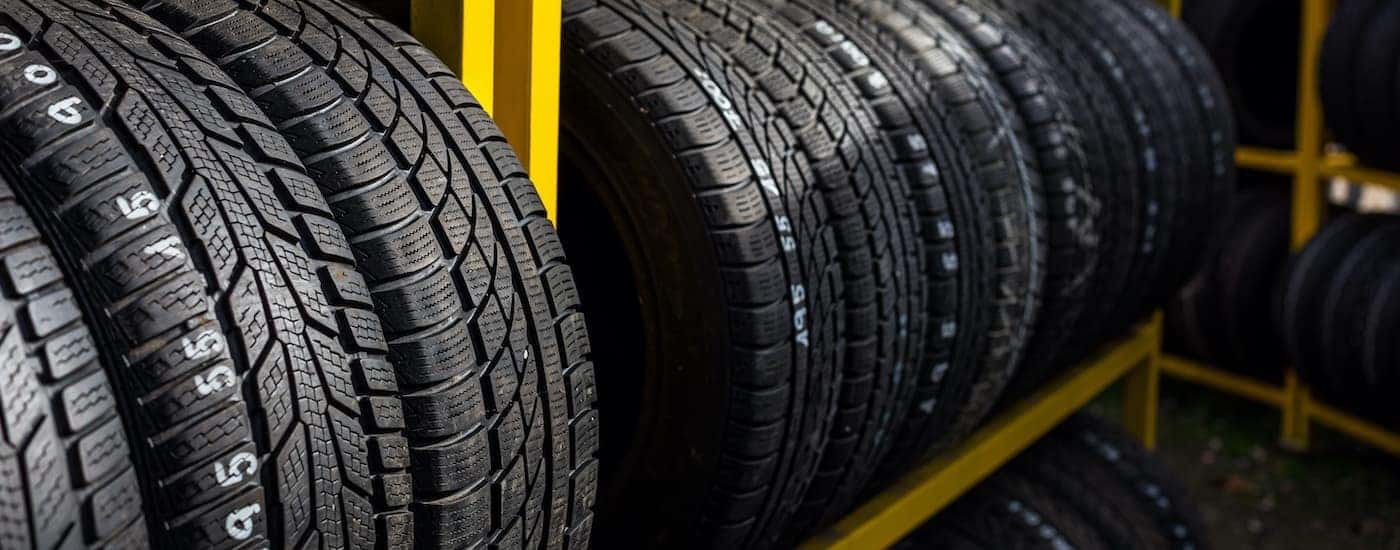
Did you know that the weather can affect the pressure in your tires? The principle is simple when you understand how the molecules in the air react to cold and warm temperatures. As temperatures fall, the molecules in the air move slower and get closer together. In contrast, warmer temperatures allow the molecules to move faster and farther away from one another.
Think of the molecules in the air as a group of people. This group might huddle together to stay warm on a winter morning, lessening their overall footprint by standing closer to one another. In your tires, this results in a slight deflation or loss in air pressure. On a summer day, the last thing that a group of people wants to do is be close together to generate more heat, so they spread out and move faster away from one another. This increases the air pressure in your tires.
Now, let's look at the numbers. Your tires can lose or gain around one psi of air pressure for every 10-degree Fahrenheit change in temperature. This means that the air pressure in your tires can decrease on a crisp fall morning and increase the same afternoon as the temperature climbs. This fluctuation in air pressure is typical and is why we encourage every driver to be mindful of their tires and routinely check the pressure by hand or via the tire pressure monitoring system,
Another integral part of maintaining your tires is ensuring they're properly rotated and balanced. Most tire manufacturers recommend balancing your tires every 7,000 miles. This interval is convenient and can often align with a routine oil change, saving you time by having multiple services done simultaneously. But why is balancing your tires important?
Balancing your tires should be as routine as an oil change because a correctly balanced tire performs better and lasts longer. During the process, our technicians will put the wheel and tire on a balancing machine that measures any imbalance as the wheel spins. The measurements give the technician the necessary information to add or remove the proper weight to uniformly balance the tire.
Several situations require tire balancing. For example, you'll need to have your tires balanced anytime you have a flat, have a tire repaired, buy a new tire, or buy a new set of tires. Other indications that it's time to have your tires balanced include uneven tread wear or vibrations in the steering wheel or seat.
Tires are your vehicle's only point of contact with the road, making them pivotal to your safety and how your car, truck, or SUV performs. Because of this, everyday wear and tear on your tires are inevitable. Daily driving, especially aggressive acceleration and braking, and natural imperfections in the tires can impact the weight distribution or balance. Just a half-ounce weight difference can produce vibrations, so you can see why balancing your tires is critical to your experience behind the wheel.
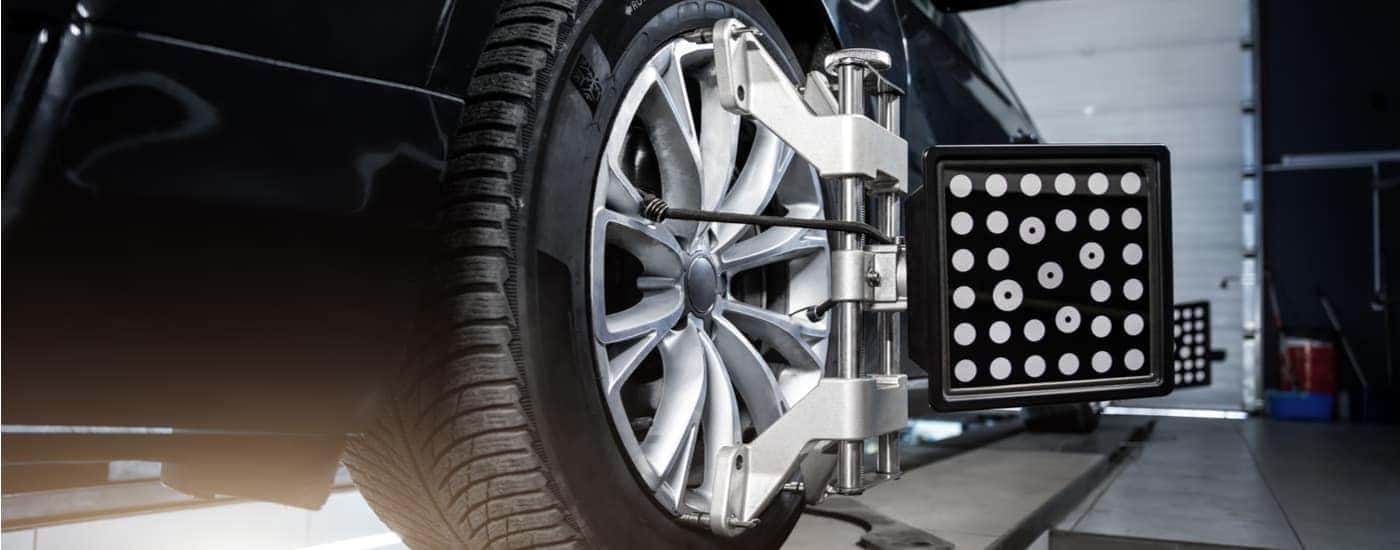
Did you know an alignment doesn't involve adjusting the wheels or the tires? Instead, an alignment adjusts the suspension and steering, two components that connect your car, truck, or SUV to its wheels. So, how do you know when it's time for an alignment? Symptoms that you need an alignment include uneven tire wear, your car pulling to one side when you try to drive in a straight line, and vibration in the steering wheel.
During an alignment, our technicians will adjust the settings of your suspension to ensure your tires make optimal contact with the road. Every model has specific alignment recommendations from the manufacturer. For example, a Jeep Wrangler has specific camber, toe, and caster angles that our technicians will reference, making the necessary adjustments to properly align the suspension, steering, and tires. This alignment improves how your vehicle handles and extends the longevity of your tires.
Uneven tread wear is a telltale indicator that you need a wheel alignment because it proves the tires are not evenly positioned to make uniform contact with the road. A misaligned vehicle may also force your car, truck, or SUV to pull in one direction, sharply or subtly. When this occurs, you may also notice that your steering wheel is crooked as you attempt to drive in a straight line.
We encourage our customers to have their tires rotated and suspension aligned with every routine oil change or sooner, depending on driving conditions. For example, spending a lot of time on unpaved roads or repeatedly hitting potholes or curbs can require more frequent alignments. In any case, having a routine tire maintenance schedule that includes regular alignments extends the longevity of your tires and improves how your vehicle performs, allowing you to get the most out of your investment every mile ahead.

Think about how much your tires do for your travels every day. This is why it's so important to prioritize tire maintenance so that you can ensure the safest, most enjoyable ride possible. Not only do your tires physically allow you to travel from one location to another, but they are also responsible for acceleration, braking, and handling, all of which are crucial to your travels. Making sure your tires have the proper pressure levels, tread depth, alignment, and balance will give you a more secure ride.
The great thing about tire maintenance is that if there's a problem, a professional will be able to diagnose it and handle it accordingly. Here at Faricy Chrysler Jeep, we will perform a visual inspection of your tires, looking for any signs of overinflation, underinflation, problematic tread wear, and more so that any issues can be fixed before you set off on your journey. As a driver, you'll also be able to notice when something is amiss if there's a lot of vibration or noise when traveling, as well as veering to one side or the other, which can mean that your tires need to be addressed.
When it comes to tire care, prevention is the name of the game, meaning that it's recommended to bring your car in for service regularly to avoid problems developing later on. After all, if your tires aren't inspected on a regular basis, you run the risk of getting into an accident, potentially injuring yourself or a fellow traveler. Do yourself a favor and treat your tires with the respect they deserve. Ensure that they're taken care of by professionals so you won't have to worry about the unfortunate occurring.

Faricy Chrysler Jeep makes it easy to maintain your tires properly with our state-of-the-art service center and experienced technicians. We offer top-notch care for your vehicle alongside perks like convenient scheduling, early bird drop-off, Saturday service, car rentals, and more, so it's not a hassle to take time out of your busy day to bring your car in for service. Our technicians are always up to date on the latest service bulletins and factory recommendations, so you can trust us to service your vehicle efficiently and, above all else, correctly. If you're looking for a service center for your car, Faricy Chrysler Jeep has got you covered, and when it comes to your ride, your tires play an integral role in your safety. Be sure to make your tires a priority, and you'll be able to enjoy a smooth drive for many miles to come!

