


Faricy Chrysler Jeep
You've made the plunge and joined the Jeep Wave family, so it's only natural that your next step is to look for Jeep off-road accessories. Fortunately, your search brought you to Faricy Chrysler Jeep. We're your Jeep destination and a one-stop shop for all your OEM accessories. But what does it mean to shop for OEM parts with us?
Buying a Jeep is an investment. Whether you're behind the wheel of a Wrangler, Gladiator, or Renegade, we'll help you protect that investment and take your Jeep to the next level with our state-of-the-art service center and parts departments. Together, we'll help you find genuine parts and accessories that will keep your Jeep a Jeep at a price you can afford.
While many automotive centers rely on aftermarket parts to cut costs, we believe in giving our customers only the best. "Original equipment manufacturer" or OEM parts are precisely that because they're made specifically for your Jeep. Many claim that parts can be one-size-fits-all in the automotive world, but there's no room for error when you're pushing your Jeep to the limit. That's where high-quality, genuine OEM parts can significantly improve your vehicle's capability and performance, not to mention your peace of mind on and off the pavement.
You'll find OEM Jeep off-road accessories here at Faricy Chrysler Jeep, but you'll also find something far more significant. You'll meet a team that's just as passionate about Jeep life as you are. This passion is integral to who we are, fueling our expertise and our unique approach to helping customers like you. So, how can we help you get the most out of your Jeep? It's time to find out!

You've likely been to the grocery store and noticed there are several different types of the same product. For example, there's name-brand spaghetti sauce, and there's also an off-brand version that's lower in price but promises the same quality. In some cases, swapping for the off-brand version doesn't sacrifice taste, but in others, it can mean a dramatic difference between Italian-inspired marinara and a watered-down alternative.
The same is true for automotive parts. OEM parts are name-brand parts made specifically for your vehicle and usually come with a warranty. In contrast, aftermarket parts rely on a one-size-fits-all approach, often using lower-quality materials to reduce the price. While these savings may seem like a perk, they can result in more expenses if you have to replace the aftermarket part more frequently than a genuine OEM part. It's like buying a $5 off-brand toilet repair kit only to replace it in a month when the $20 name-brand kit would have fixed the problem for the next five years.
Another benefit to buying an OEM part is maintaining the integrity of your vehicle. In other words, your Jeep is still a Jeep even with a new OEM part because it's built and backed by the manufacturer. In contrast, an aftermarket part that can also fit a Mazda, Toyota, or Chevrolet doesn't keep your Jeep a Jeep even down to the smallest components, and that's a significant deterrent for many Jeep purists.

Lift kits are one of the most popular ways drivers choose to modify and customize their Jeeps. Why? Lift kits can dramatically enhance a Jeep's overall aesthetic and serve a practical purpose by improving ground clearance. For example, you can add a lift kit to your Wrangler that can raise it anywhere from one to six inches, depending on your needs. So, how do you know how high to go and what type of lift kit to buy?
Lift kits are available in two options: body lifts and suspension lifts. Body lifts are relatively straightforward and, with the right tools, can be done from the comfort of your garage. These kits come with spacers that you can position between the vehicle's frame and body to enhance the height of the Jeep without affecting the suspension or ground clearance. As a result, body lifts are a popular go-to for Jeep owners who want to outfit their rigs with larger tires and wheels.
Suspension lifts are more complex and are often left to our expert technicians here at Faricy Chrysler Jeep. These lift kits dramatically affect the suspension and usually require replacing the shocks, springs, control arms, and sometimes the steering components and driveshaft. By making these adjustments, the entire Jeep is altered to give you improved ground clearance, articulation, and off-road handling.
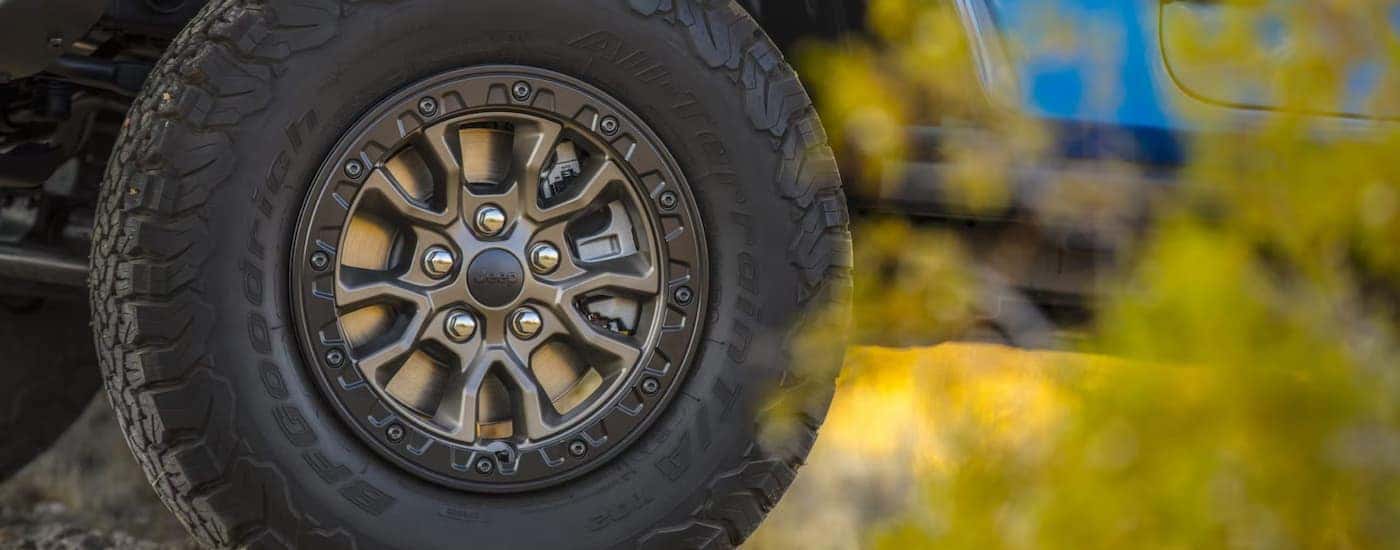
Jeeps are destined to get a little mud on the tires, which makes shopping for the right off-road tires a massive responsibility for a Jeep owner. Off-road tires are typically divided into all-terrain tires and mud-terrain tires and are primarily used on four-wheel drive vehicles. So, what's the difference, and how do you know which tire is best for your driving needs? We're here to help with that, too.
Think of an all-terrain tire as a great all-around tire that can easily tackle your weekday commute and handle some light off-roading on the weekend. It's an off-road tire because of its deep tread design, smaller tread blocks, and sharp biting edges that enhance traction. Mud tires take these same design features to the extreme with an even deeper tread that channels mud and debris away from the tire to improve traction. However, this often comes at the cost of efficiency and road noise, making all-terrain tires quieter and longer-lasting.
If you're looking to spend a lot of time tackling technical terrain, mud tires are the best option. While they are noisier than all-terrain tires, advancements in tire design have improved this dramatically, so modern mud tires aren't as loud on the pavement. More importantly, their design contributes to longevity on the trail, especially since they're resistant to chips, cuts, and damage from boulders, downed trees, and other debris. However, mud tires have a few disadvantages that you'll need to consider, such as poor traction in the rain, higher fuel consumption, a shorter tread life, and a heftier price tag.
Another popular OEM part you'll want to consider for your Jeep is a cold air intake. Intakes are vital to your Jeep's performance because they bring oxygen into the engine's combustion chamber to mix with the burning fuel, creating the mini-explosions that power your vehicle.
Outfitting your Jeep with an OEM cold air intake offers significant advantages for your Jeep's performance. For example, cold air is denser, meaning a cold air intake increases the amount of air delivered and how fast it gets to the throttle body in the engine. This improves the response between the throttle and engine, increasing horsepower. In addition, the cold air also reduces the amount of fuel the engine needs to combust, which can lead to improved fuel economy. In the Jeep world, it's a win-win!

Are you ready to take your Jeep to the next level? If so, it's time to venture to Faricy Chrysler Jeep, where our certified and factory-trained technicians can help you find the best Jeep off-road accessories. But more importantly, we have genuine OEM parts on hand and guarantee to help keep your Jeep a Jeep, whether you're buying a lift kit, cold air intake, or a new set of mud tires for your next adventure.
While you'll find all these accessories and parts available, you'll also discover that Faricy Chrysler Jeep is your off-road destination and Jeep authority. We can help modify your vehicle with the right OEM parts and accessories so your next off-roading experience is unbeatable. But how can we make this guarantee? Because we're passionate Jeep fans with a penchant for adventure just like you!
If you're looking for the right parts to modify your Jeep, venture to Faricy Chrysler Jeep and introduce yourself to our team. We can't wait to hear more about your next adventure and how we can help you get the most out of your time behind the wheel. So, what are you waiting for? Come see us today!

